

A collaborative app that turns home-hunting into a team sport.
01
About MyHomii
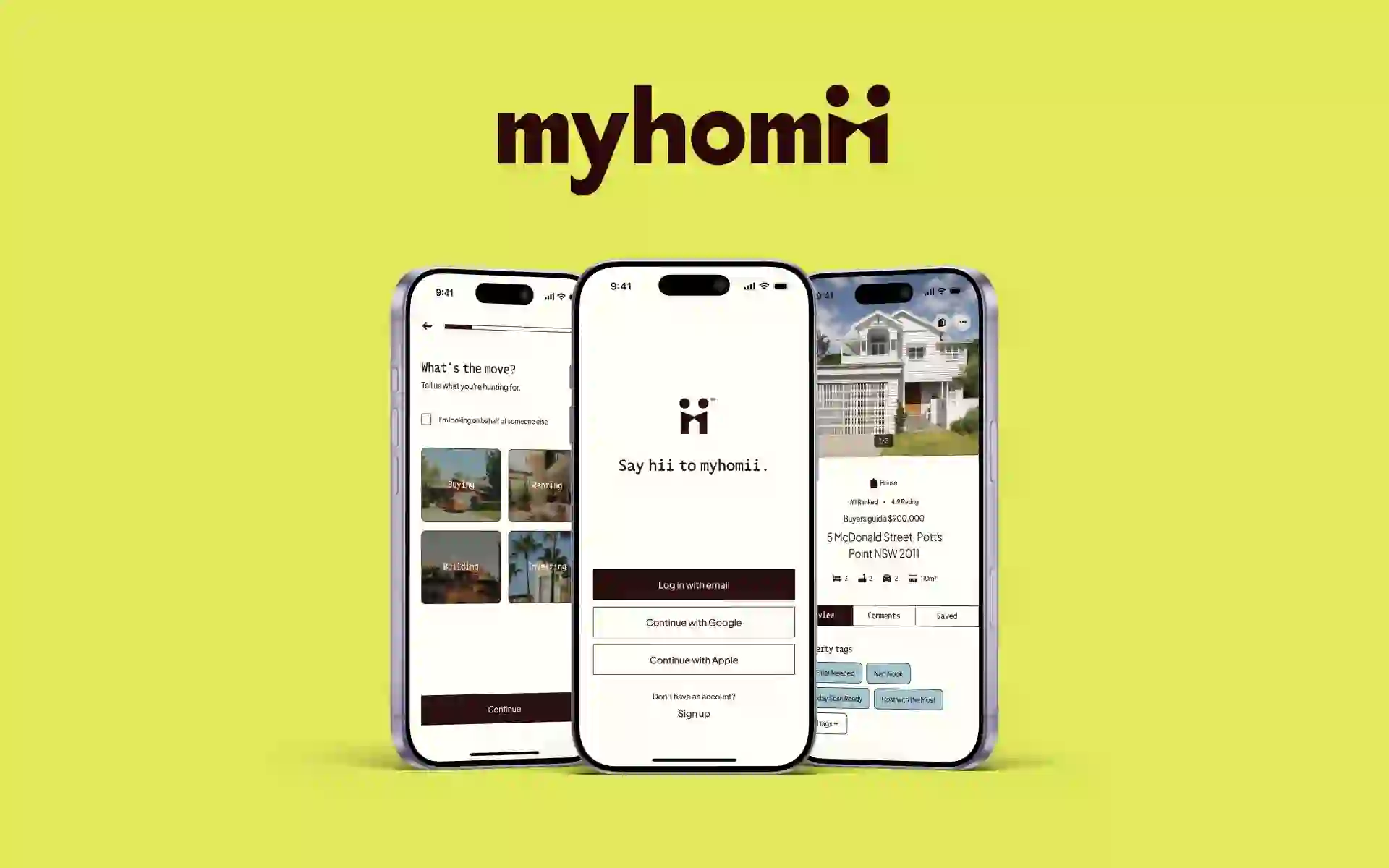
A collaborative proptech platform built to bring ease to property decisions.
Myhomii is an platform designed to help buyers, renters, and future home builders organise, compare, and decide on properties together. By combining personal notes, site photos, and uploaded documents in a single, private space, the platform lets users evaluate homes alongside friends, family, and advisers.
02
The Challenge
Property hunting is rarely a clean spreadsheet exercise.
Whether someone is securing a first rental, buying a flat, or building from scratch, the property journey is deeply emotional. The initial excitement quickly dips into admin overwhelm, financial stress, disjointed WhatsApp chats, and consequently decision fatigue.
The myhomii founder came to us wanting to replace that chaos with a modern, cheeky, and genuinely helpful platform where buyers, renters, and future builders can organise, compare, and decide on homes together.
03
Our Solution
One shared space for every property, photo and opinion.
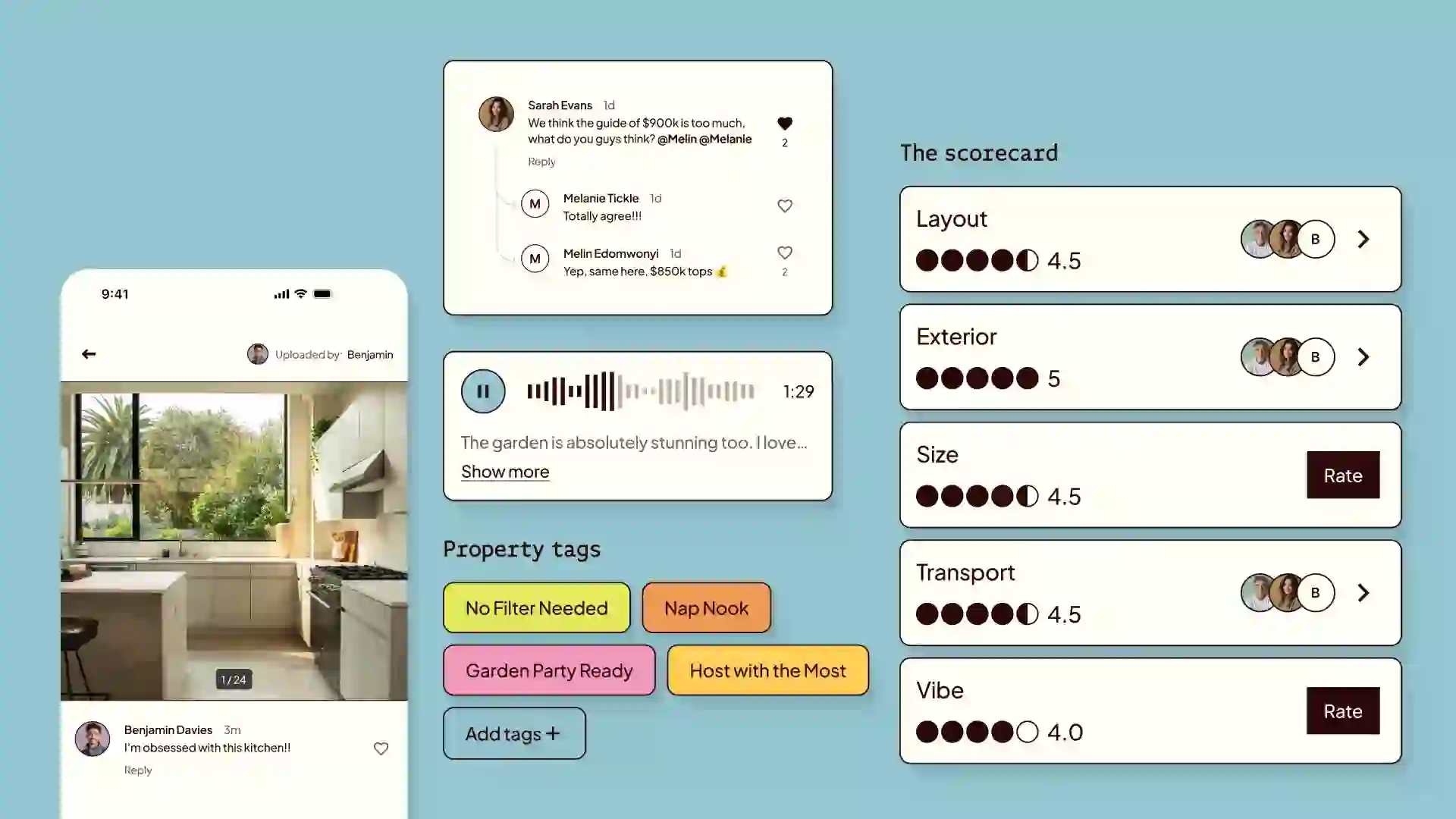
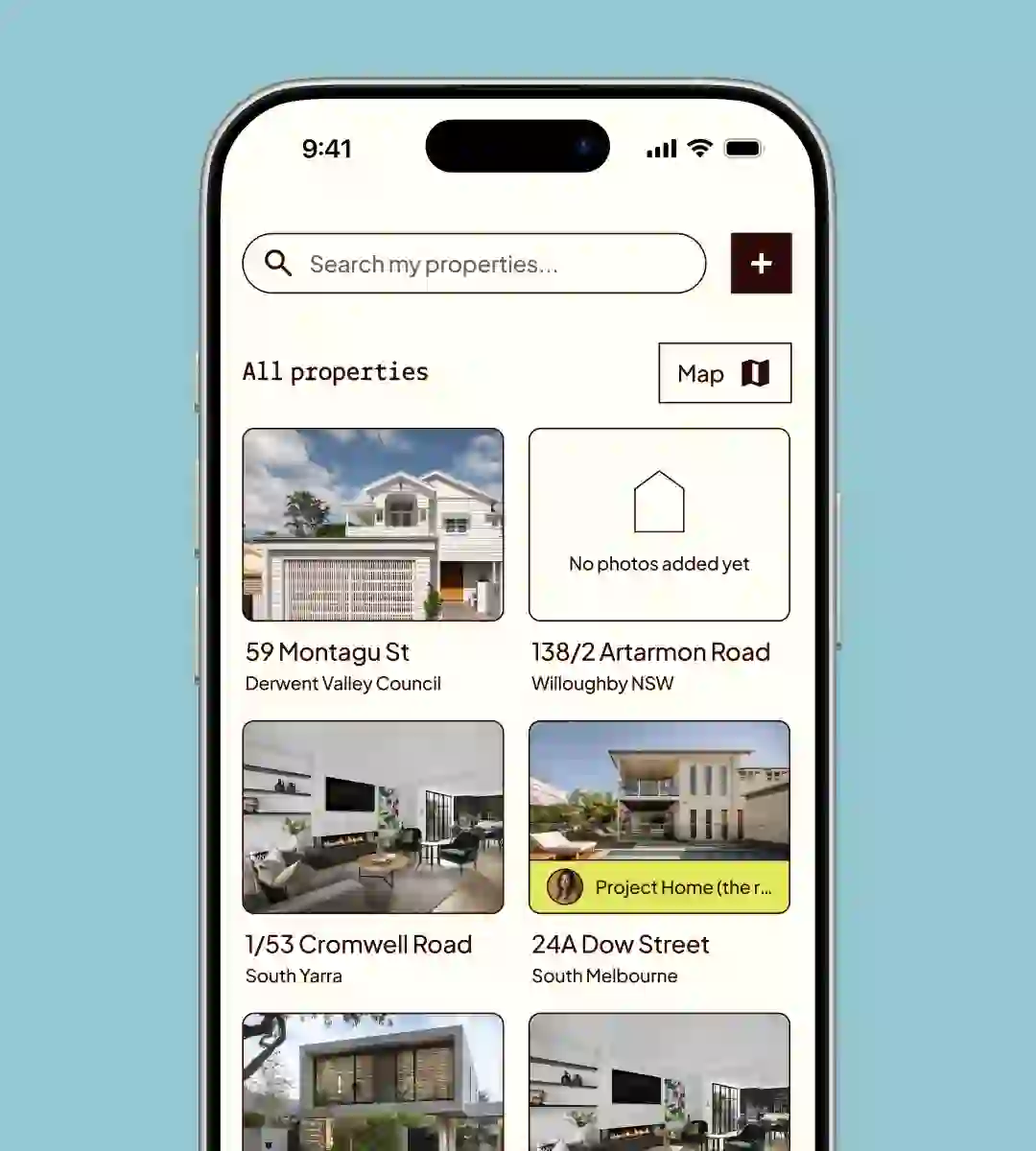
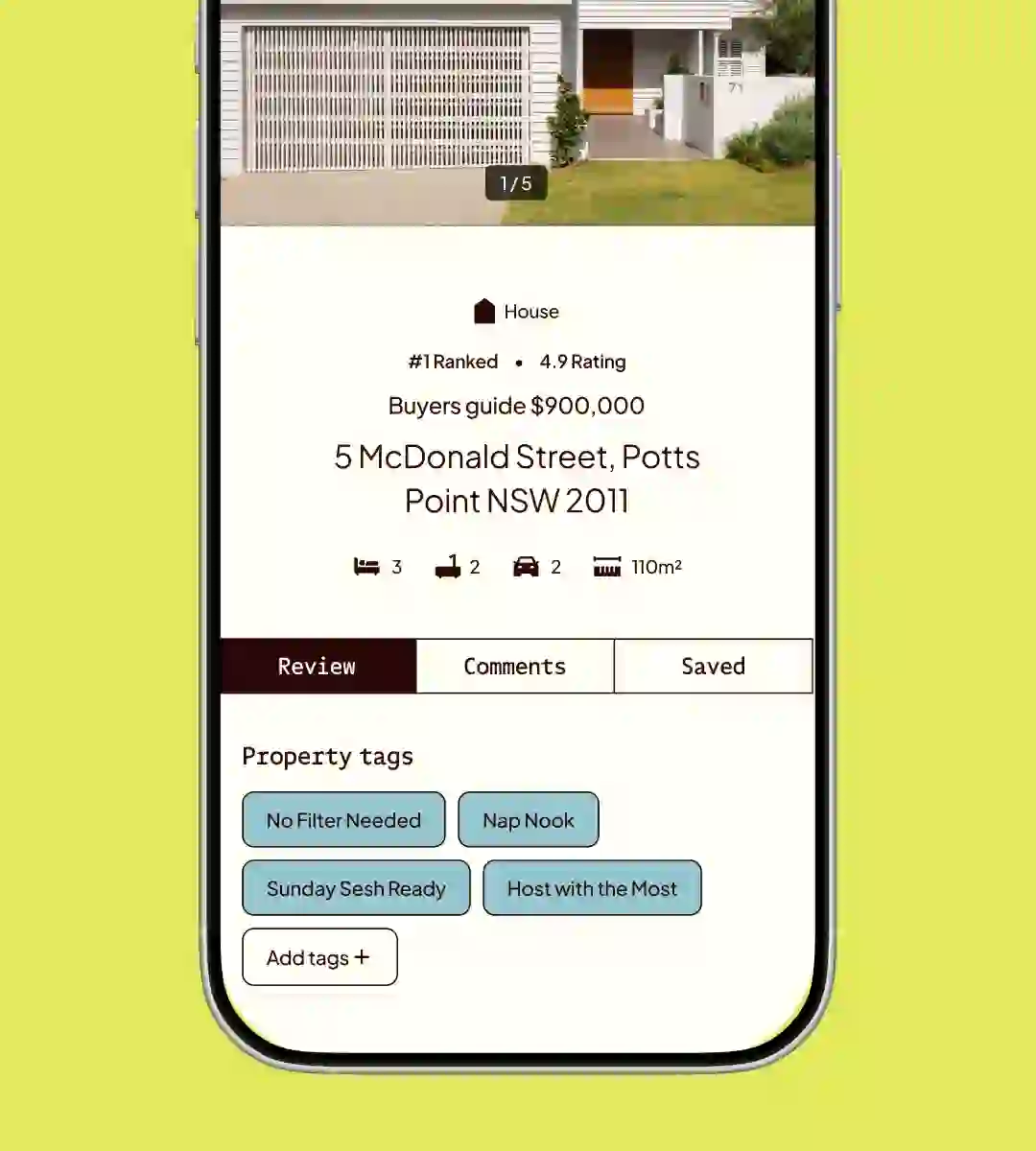
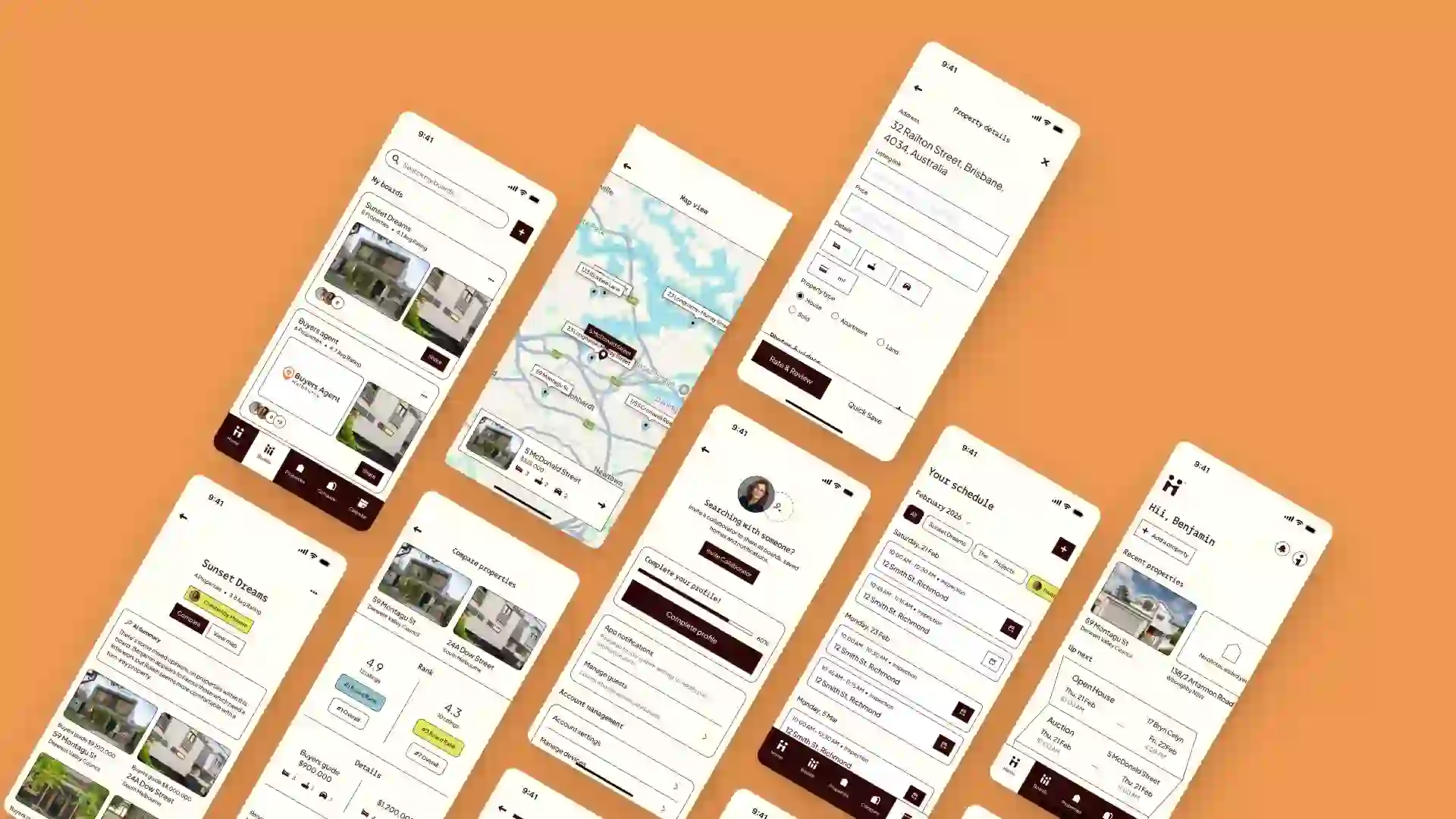
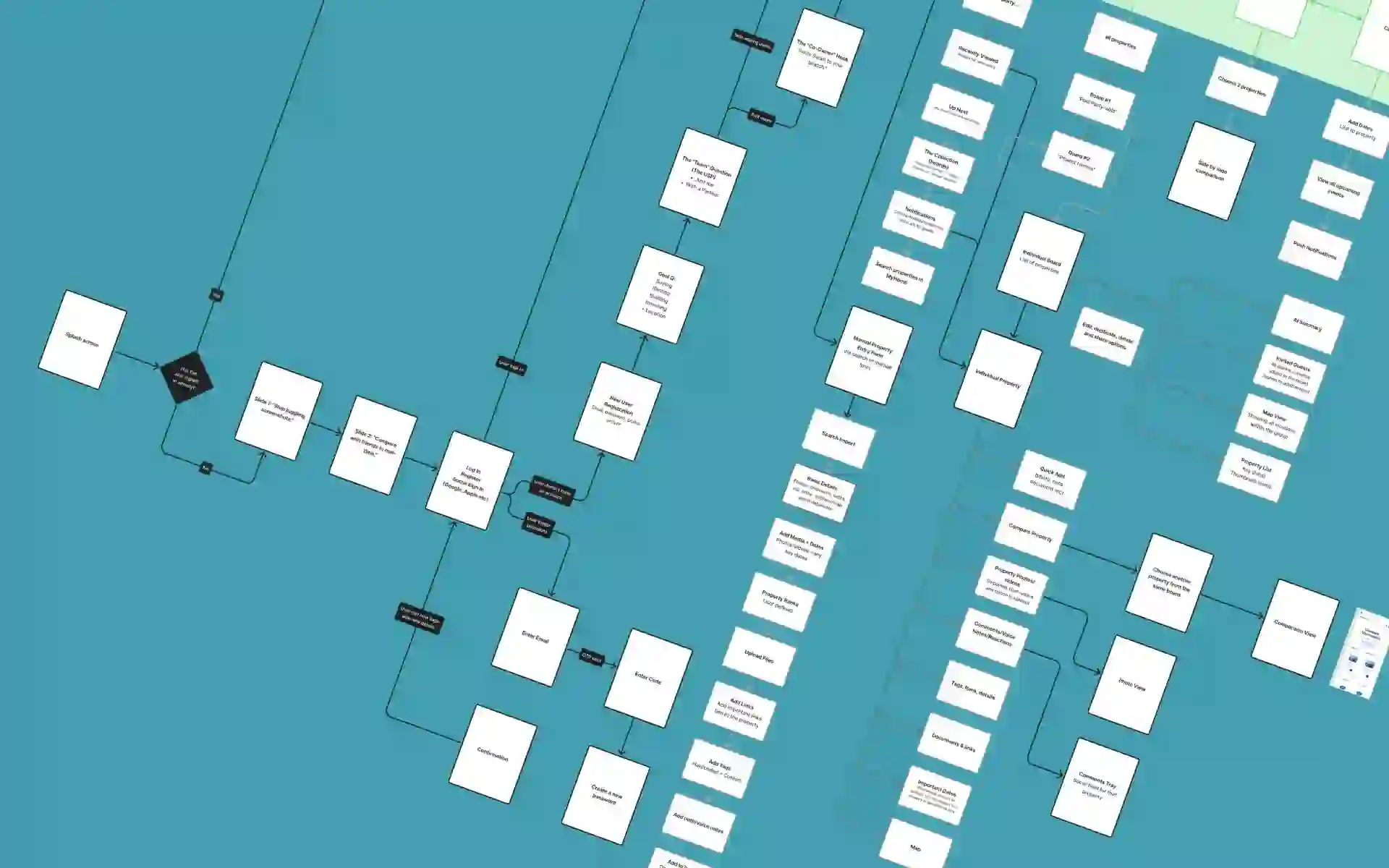
We translated myhomii’s early-stage concept into a clear web and mobile product experience from day one. Instead of juggling multiple property links and screenshots, users can build shareable boards, comment on images, rate property features, and compare options side-by-side.
To give users total confidence, the platform pairs personal notes and site photos directly with collaborators, keeping critical information available for all parties involved in one single place.
04
UX & UI
Low-friction social feedback built on a lean stack.
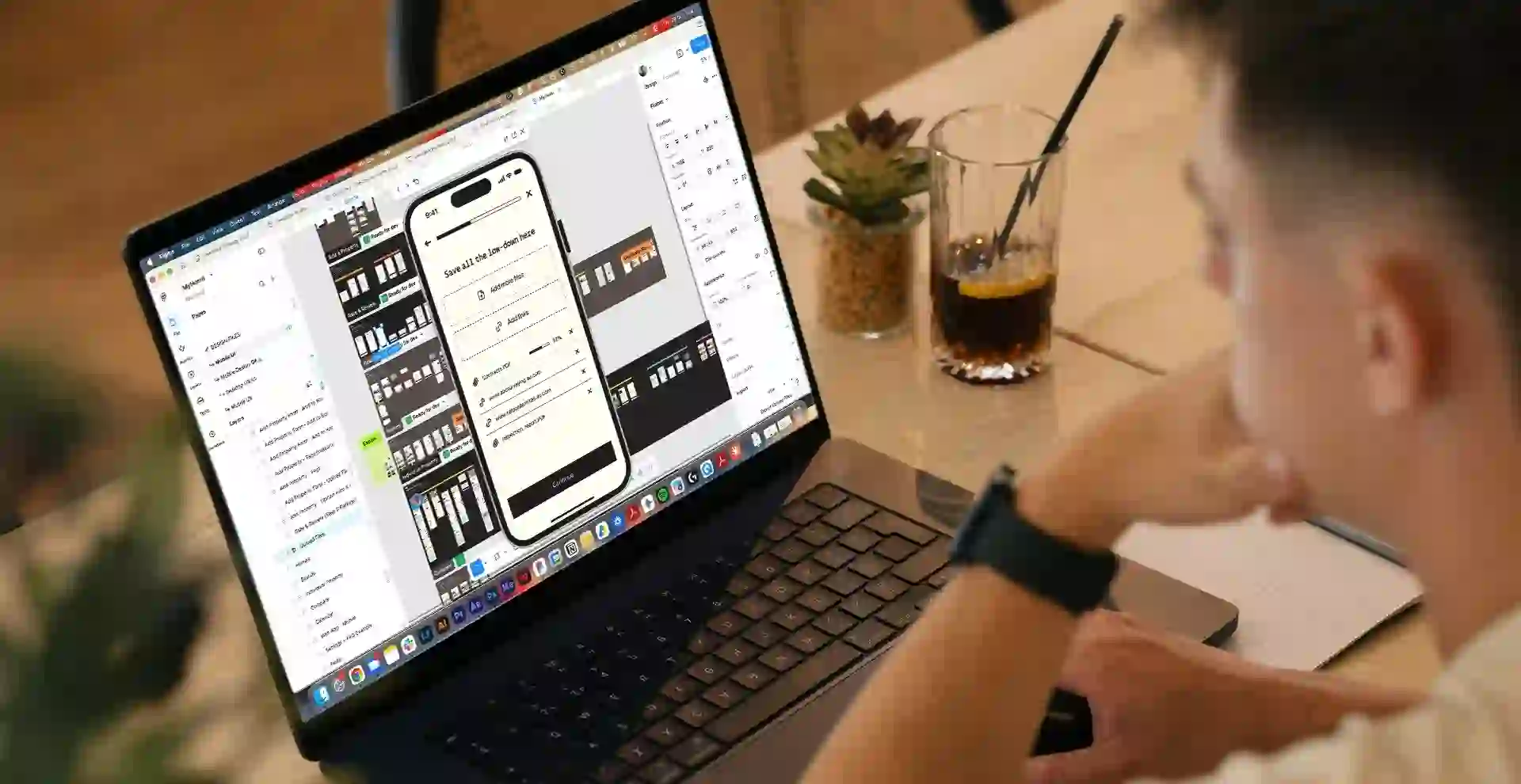
Property decisions rarely happen in isolation. We designed private collaborative spaces where friends, family, and advisers can jump in to leave reactions, voice notes, and threaded comments without jumping through tedious sign-up hurdles.
Our friends at DutchScot created the playful yet refined brand. Together, we applied this identity to the user interface, aiming to distinguish myhomii from existing property apps.
05
The Build
One codebase, shipped to iOS, Android and the web.
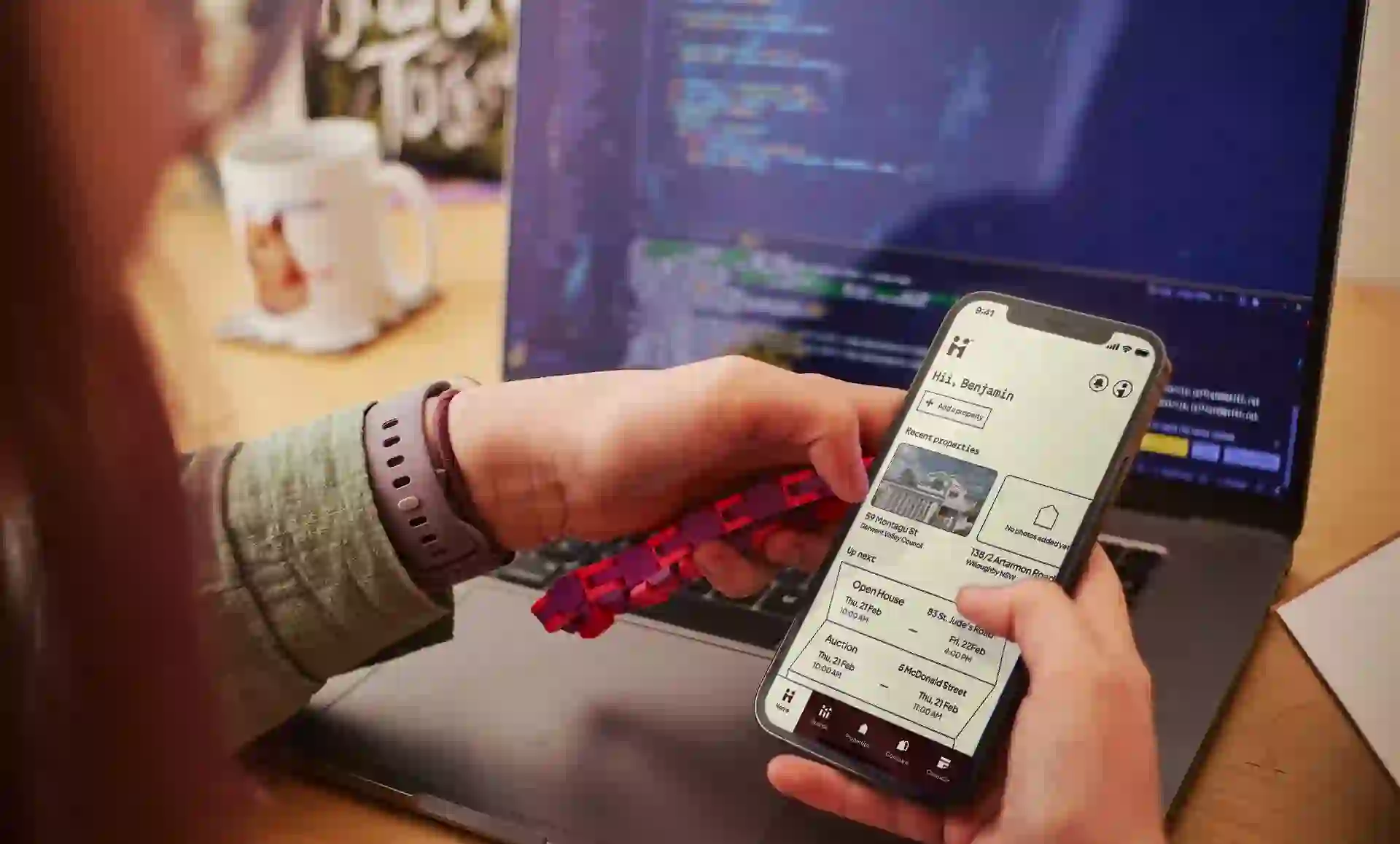
We are big Laravel fans and proud early adopters of NativePHP, however, it’s not something that we felt was mature enough to use for a client project. myhomii is our second Flutter build after our flagship product Gaffa, and in both cases, we are extremely pleased with the results.
The build is deployed for Android, Apple and the web. We did make some small customisations for the web – specifically for larger landscape screens, but setting that aside Flutter allowed us to write one and deploy everywhere with very little effort compared to its contemporaries.

06
Sustainibility
Built to do more with less
The API makes as few trips to the database as possible and ships with an optimised autoloader and dependencies, manifest as a single container – which are philosophies we apply to all our builds. AI-written summaries are cached against a fingerprint of the input data and prompt instructions behind them, and are only regenerated when something has changed – a shared screen opened by ten different users costs only one call to Gemini. We deliberately picked a geocoding service whose license allows us to store an address’s latitude and longitude indefinitely, keeping costs down for address location on a map.
Lastly, the platform’s API lives on Google Cloud Run, a modern, managed and serverless platform which can scale to zero, this keeps resource usage and running costs to an absolute minimum during the quiet period overnight.
07
Accessibility
Designed to work for everyone, on every screen
The build is, of course, highly accessible, all interactive components carry screen-reader semantics. Voice comments are transcribed automatically by AI via Laravel’s first party adapter, so audio comments also exist as text. Layouts adapt from phone to desktop web and content is capped at readable widths.

08
Safety Guardrails
Moderation that protects people without compromising their privacy
Because of myhomii’s collaborative nature, it is built on user-generated content (UGC), so we put safeguards in place to keep it a safe space that couldn’t be misused beyond its intended purpose. We integrated automated image and text moderation to filter harmful or inappropriate content before it reaches users, and stress-tested it extensively. Because users share within trusted circles, and because we were committed to protecting their privacy, we chose not to manually monitor conversations or add in-app reporting at launch. Instead, users can reach us through a dedicated help section, and we’re tracking support requests post-launch to decide whether a reporting feature is needed as the community grows.

Building for emotional clarity.
Designing an experience that balances heavy property data with a playful, human touch was easily one of the most rewarding challenges our studio took on this quarter. Turning a notoriously stressful life milestone into a clear, shared decision-making process made this project an absolute joy to build.
-
Working with Seedable was better than I could have imagined, right from the beginning they were so collaborative and went above and beyond on UX, design and build considerations. As a solo founder it was such a delight to work together and feel part of a team, they are truly the best!

Melanie Tickle
Founder of myhomii